
India-first overseas recruitment guide
State-Wise India Gulf Jobs Candidate Preparation
Global Recruit Way Editorial Team ·
Start an overseas job application with the vacancy, not with a promise of travel.
What to prepare
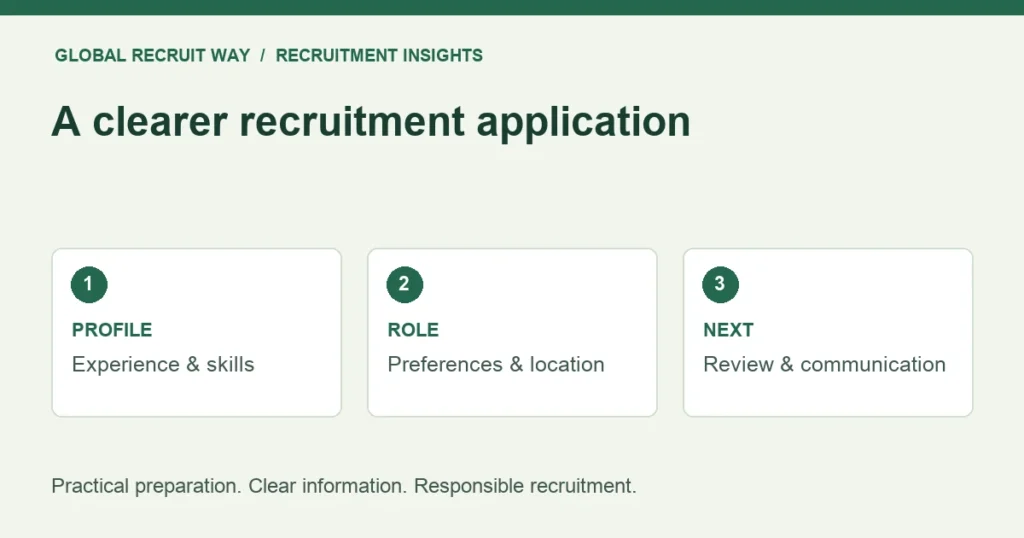
Start an overseas job application with the vacancy, not with a promise of travel. Read the role, duties, location and stated requirements, then compare them with your actual experience. If a requirement is unclear, ask a specific question instead of applying under several unrelated job titles. General CV submission can support a future review, but it is different from applying for an identified open role.
Prepare a small application pack: a readable CV, current contact details, truthful document status and a short explanation of your relevant duties. Keep a record of where and when you applied, the vacancy or job code and the next action. This helps you follow up without sending inconsistent versions of the same profile through several contacts.
Before an interview or document request, verify the communication channel and clarify which item is needed and why. Distinguish shortlisted, interviewed, offered and approved-for-travel stages in your own record. Those stages are not interchangeable. The official vacancy portal and candidate form provide the appropriate starting points; selection depends on a real employer requirement and the applicable checks.
Apply this to your situation
Build a profile that a reviewer can compare with the specific vacancy. Record what you have done, the evidence available and the questions still open. When an employer asks for additional information, send the relevant item with the vacancy reference rather than a new conflicting CV. Keep your own application log, and tell the team if availability or contact details change. Submitting a profile starts a review; it does not confirm a job, visa or travel arrangement.
For state-wise candidate preparation, keep job evidence separate from residence. A state label does not tell an employer which duties a person can perform, the language they can use at work or when they can join. Use the same CV and document checks for every applicant, while recording interview availability and communication preferences individually. Discuss relocation only after the actual role and location are clear.
A practical review checklist
- Identified vacancy or general application
- Relevant experience match
- Current CV, contact and document status
- Application date and reference
- Current stage and verified next action
Resolve open questions before the next stage
Ask the responsible contact to confirm any unresolved item in writing. Keep application, interview, offer and joining stages separate. A request for more information is a review step, not a job offer.
Choose the right next step
Use the relevant official form to start a review. Confirm the actual vacancy, service scope and next steps with the team. Recruitment outcomes depend on the employer and applicable requirements.