

Hiring within India
Planning Recruitment for a New Service Line in India
Global Recruit Way Editorial Team ·
Recruitment for a new service line should start with the work the business can actually deliver. Define the first customer tasks, operating owner and training plan before advertising a broad team of roles with uncertain responsibilities.
Define the work and responsibilities
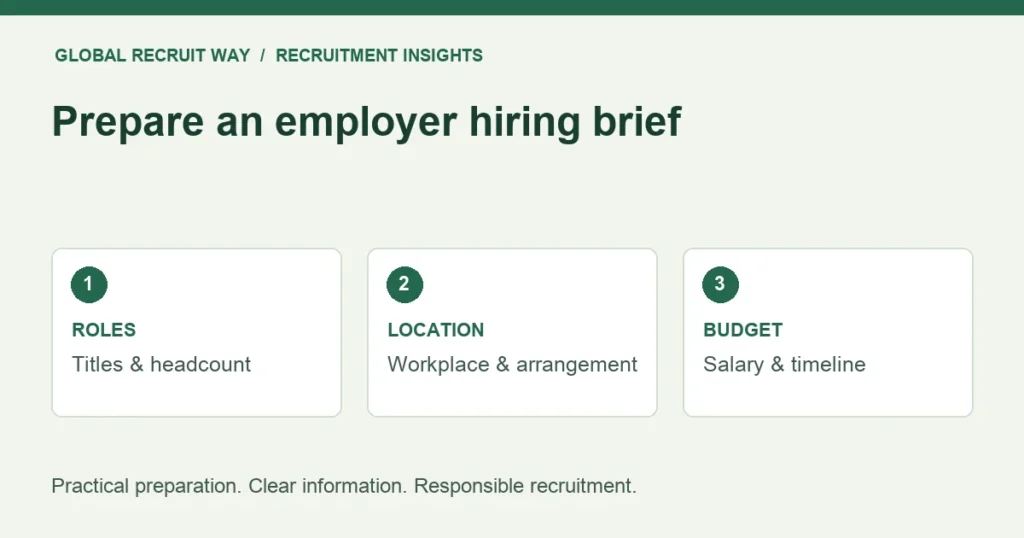
Map the initial service from customer request to completion. Identify the activities already covered by existing employees and the specific gaps that need a new hire. Separate a launch requirement from a later growth assumption. Write a vacancy brief that explains current duties honestly, including where processes are still being established and who will approve changes.
Put the process into practice
Assess candidates against realistic launch conditions. A practical discussion might cover organising an incomplete handover, identifying a missing customer input or documenting a repeatable task. Do not require the applicant to solve the whole business model through unpaid live work. Before joining, provide the minimum tools, named supervisor and an agreed first-month priority list. Review the role when actual demand emerges: responsibility may need to change, but the employer should communicate changes through its appropriate process instead of quietly expanding the job beyond the terms discussed during hiring.
Practical checklist
- Map the initial customer workflow
- Separate launch gaps from later growth
- Assess realistic setup and documentation tasks
- Review duties against actual service demand
A worked situation
Illustrative example: a company launching maintenance coordination needs an administrator to organise appointments, not a technical engineer to approve repairs. Naming the actual gap helps the recruiter target the right evidence and avoids an expensive mismatch in role expectations.
Should every planned expansion role be advertised immediately?
Recruit against approved, defined needs. A staged plan can help the business learn from early demand while avoiding promises about positions it is not ready to support.